I would like to dedicate these reminiscences to
those who, like Lula Nogueira, encouraged me
to write genealogy in a creative way. In order
to accomplish that goal I offer those whose lives
were affected by different experiences in
relation to time, place, and language.
This memoir is being written in English
because it has been my language of
expression in the last half-century.
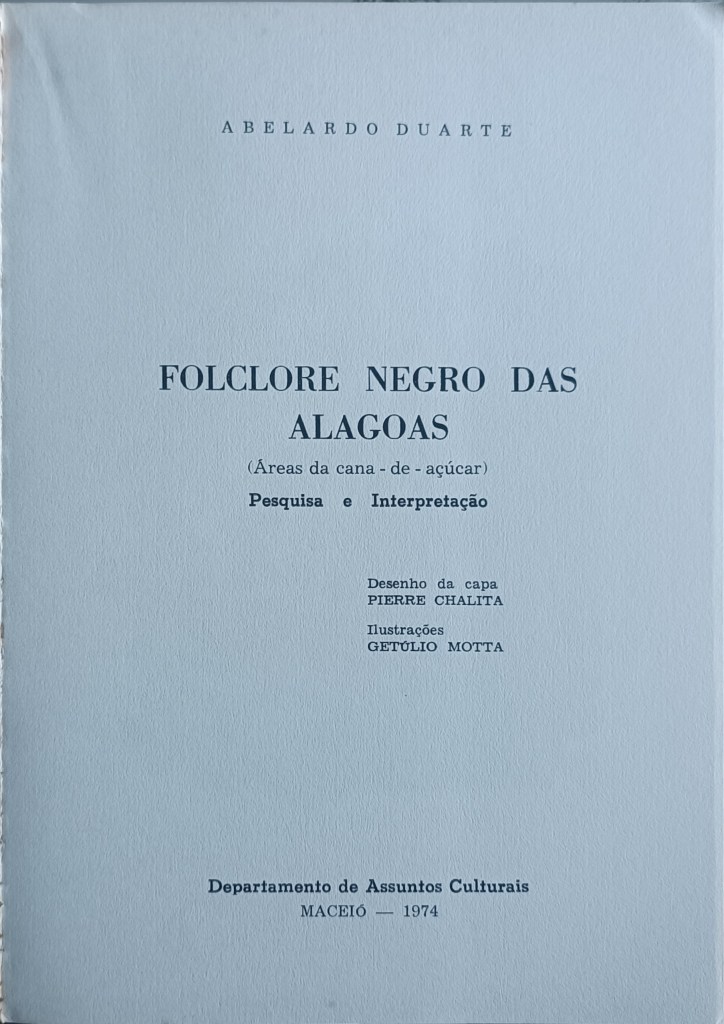
The fourth section of my book Ao norte daqui is dedicated to the memory of my great-uncle Abelardo Duarte (1900-1992), physician, historian, ethnologist, anthropologist, student of the Afro-Brazilian culture, researcher of the travels of Emperor Peter the Second of Brazil to the lower São Francisco river and the city of Penedo, and author of the book Dom Pedro II e Dona Teresa Cristina nas Alagoas (1975).
Abelardo Duarte was the son of doctor José Antônio Duarte and Maria Clementina Coutinho de França (Nolinha). He married Maria Gomes Malta (Mariquinha) in Recife. Maria was a daughter of governor Euclides Malta, which helped the saving of what became known as the Coleção Perseverança in Maceió. Without this connection, the artifacts would have been destroyied during the night known in Alagoan history as “O Quebra” [The Xangô Crackdown].
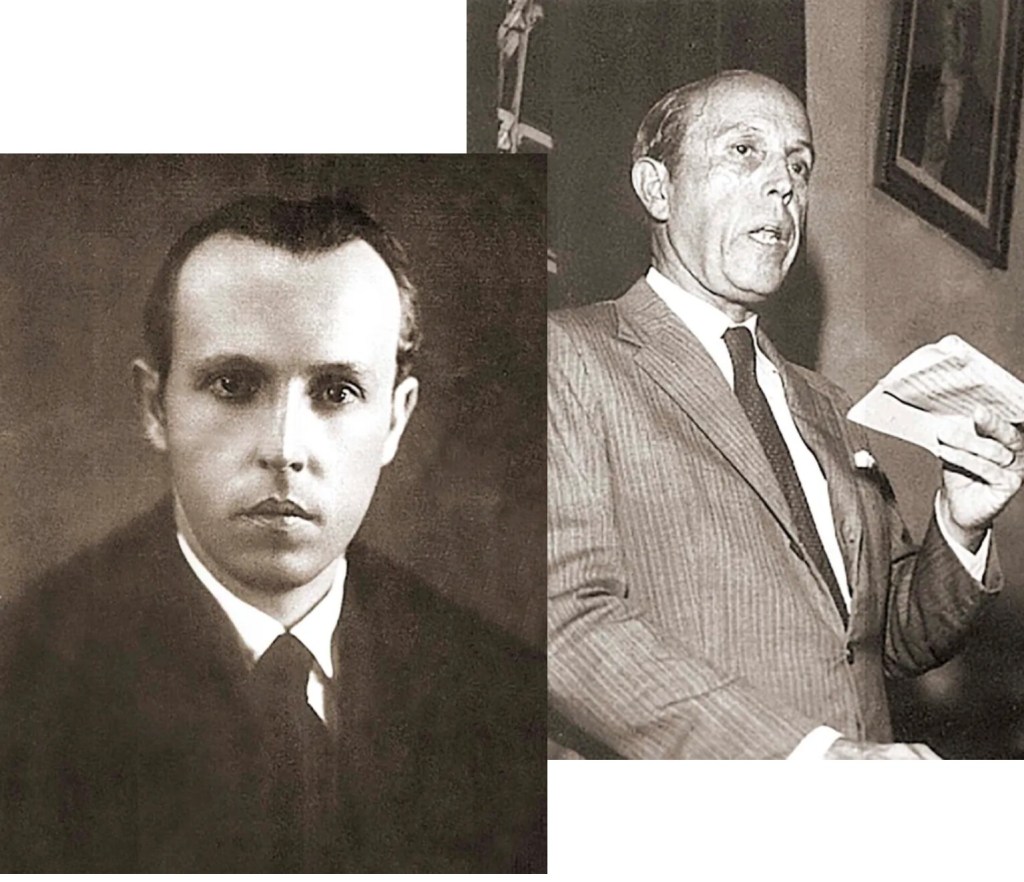
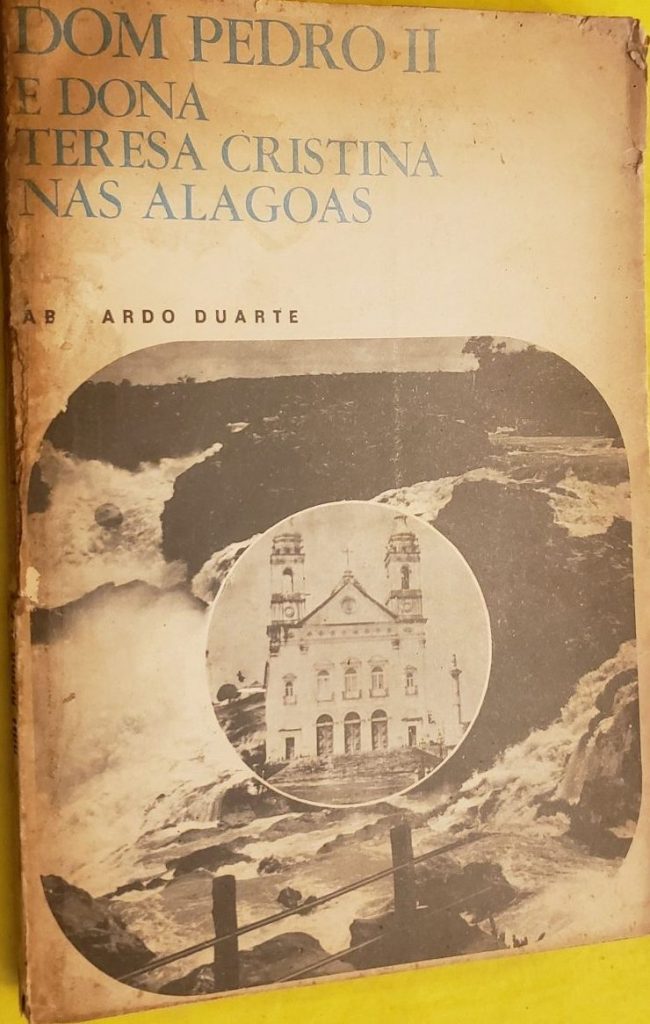
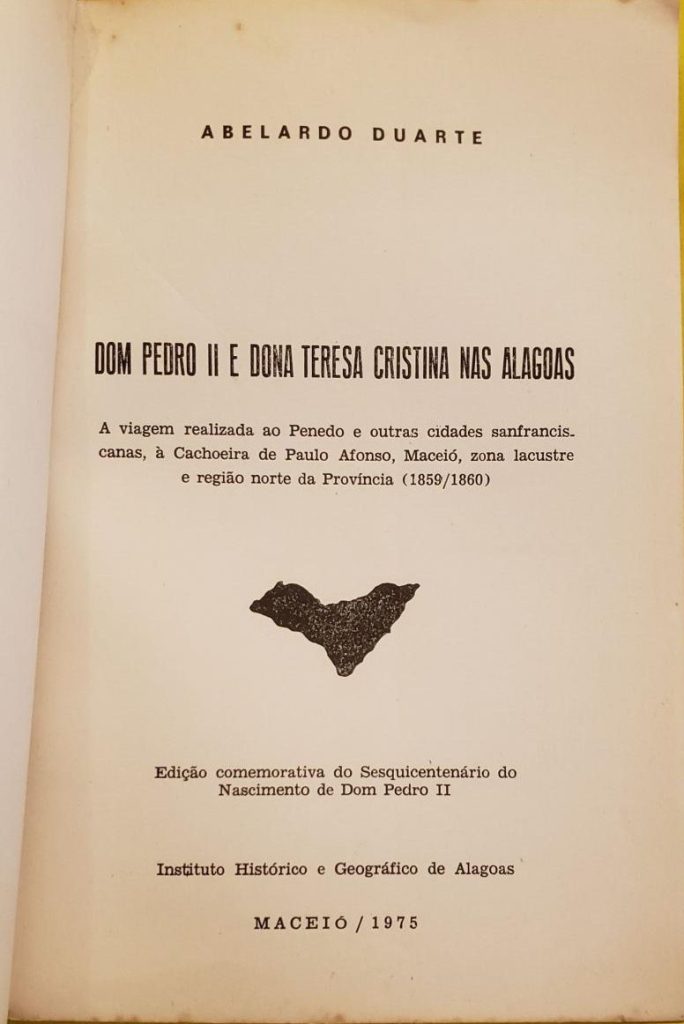
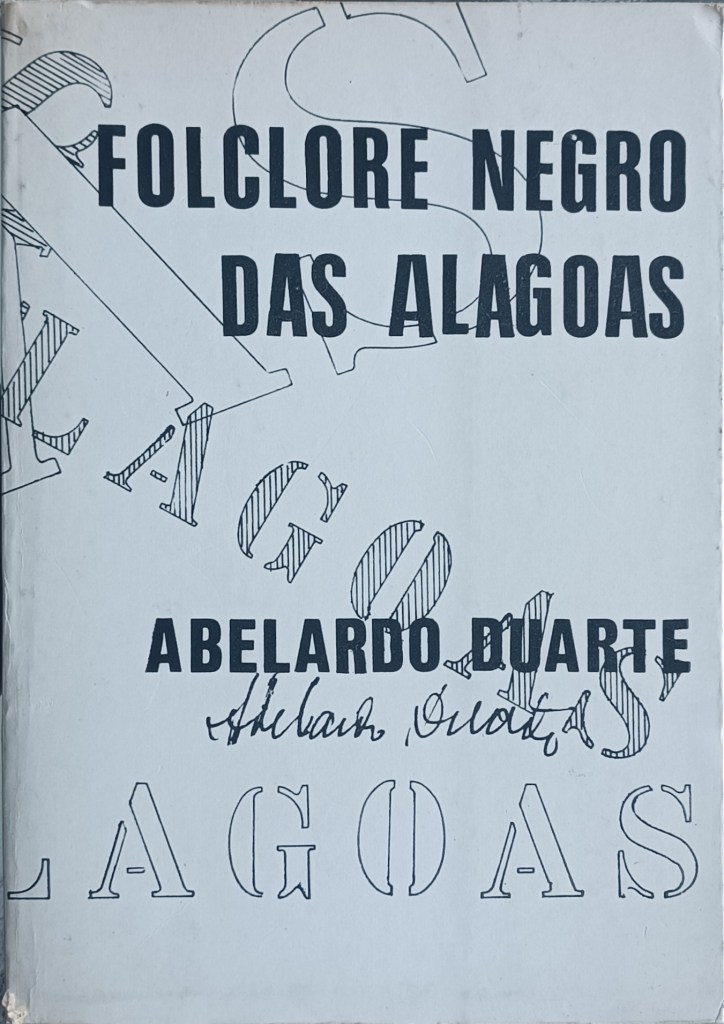
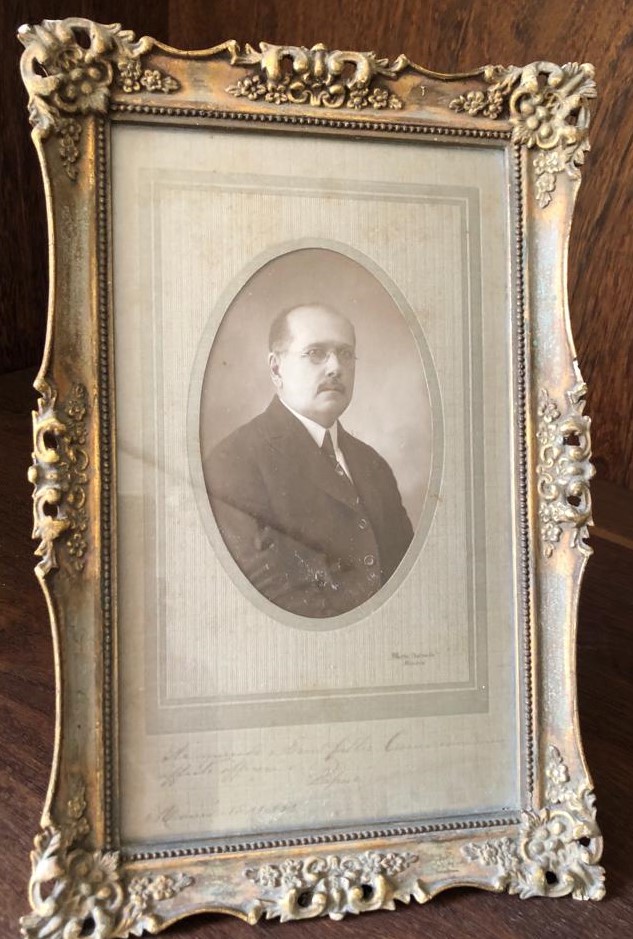
His father (below), José Antônio Duarte, was a professor in the Liceu Alagoano and one of the most popular doctors of his time. His clientele was the largest in Maceió, where he became famous for treating the poor for free. José Duarte served as Patron of Cadeira 12 of the Academia Alagoana de Letras. Like his father, Abelardo Duarte was lifetime president of the Historical Society of Alagoas, and a member of the Academia Alagoana de Letras.
José Antônio Duarte had two brothers, Pedro and Manuel. Pedro Duarte was, in addition to being a doctor, a respected dentist. The third brother, Manuel Duarte, was at one point the governor of Alagoas. There is a square named after him at the beginning of Pajuçara (Praça Manuel Duarte). Pedro was closest to José Antônio and their spouses and children were particularly close. My grandmother Alice Duarte was a godmother of Nildinha (not to be confused with “Dinha Laura”), who was one of the oldest of Pedro’s several daughters.
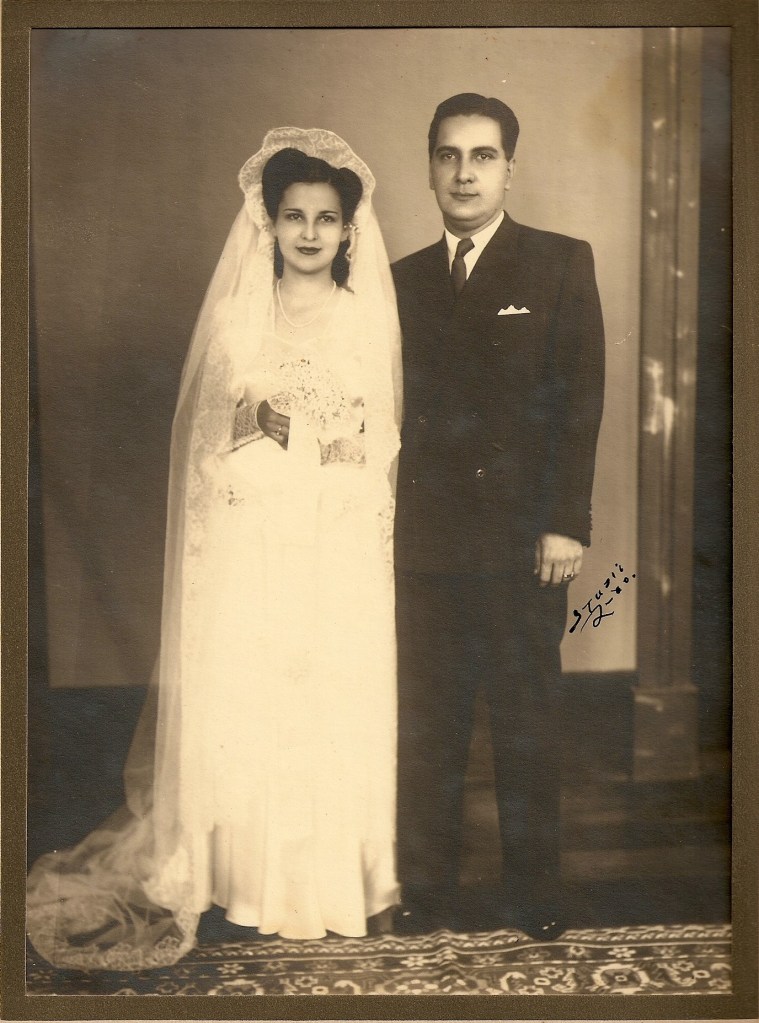
Abelardo Duarte was my mother Yedda’s uncle. Yedda married Abelardo Albuquerque in December 23, 1944.
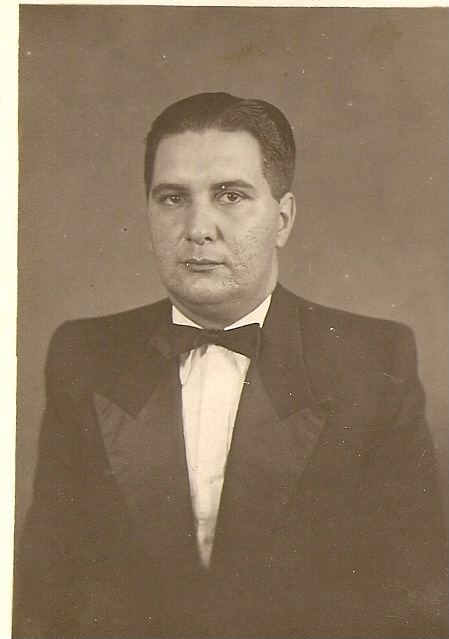
Abelardo Albuquerque in the 1950s.
The text below is transcribed from my Facebook page to celebrate my father’s centennial in 2015.
Dr. Abelardo Albuquerque
Centenário de nascimento
1915-2015
Neste 9 de outubro comemoramos, eu e minha irmã, Ivana Medeiros Albuquerque, assim como meus sobrinhos e sobrinhos-netos, o centenário do nascimento do nosso pai, avô e bisavô, Abelardo Albuquerque.
Ele me deu duas vidas. A segunda foi salvar minha vida quando eu tinha 15 anos. Tive um osteoma frontal, felizmente benigno, diagnosticado pelo doutor Eduardo Jorge. No período pré-internet ele conseguiu marcar consultas com o doutor Ermiro de Lima, por sinal pernambucano, que tinha criado a técnica de remoção desses osteomas, com a condição de que a cirurgia fosse feita no hospital-escola de São Francisco no Canal do Mangue, o que ocorreu.
Profissionalmente, a realização de que mais se orgulhava era talvez a de ter sido o co-fundador do Departamento de Ginecologia e Obstetrícia da Sociedade de Medicina de Alagoas. Apesar de ter sido um médico de muito destaque e com grande e leal clientela, não há hoje em dia em Maceió nenhuma rua, nenhum logradouro público, nenhum prédio, nenhuma clínica com o seu nome. Nunca foi do seu feitio nem do feitio dos seus herdeiros bajular os poderosos da terra para esses ou outros fins, nem o estamos fazendo agora.
Basta-nos o legado que nos deixou, bens impalpáveis de valor incalculável que são o exemplo de retidão e honestidade a toda prova. Generoso ao extremo, deu a seus filhos e netos a melhor educação que Maceió e Recife tinham a oferecer naquela época e respeitou a liberdade de escolha dos filhos, inclusive minha decisão de não viver no Brasil, inicialmente em rejeição à ditadura militar e depois em protesto contra a corrupção instalada no país, independentemente do regime em vigor ou do partido político detentor do poder.
Outra lição que nos deu a todos foi o horror à ostentação, a “aparecer”, e a qualquer tipo de auto-promoção. Apesar de ter os meios para circular na chamada alta sociedade, preferiu levar uma vida simples em companhia da devotada e querida esposa, nossa saudosa mãe Yedda, assim como dos outros membros da família, cultivando laços fortes e duradouros com parentes, vizinhos, e os numerosos compadres, comadres e afilhados. Foi também o mais dedicado dos genros, sendo adorado por meus avós maternos, que nos proporcionaram as melhores e mais profundas recordações dos anos vividos no casarão da rua do Sol.
Foi também uma vida de trabalho duro em ritmo acelerado, responsável, em útima análise, por um sério enfarte que forçou um regime de semi-aposentadoria ainda jovem, aos 52 anos de idade, seguido de muitos anos de angina pectoris e outros problemas de saúde que causaram o seu falecimento em 1994, aos 78 anos. Sua morte foi assunto de uma crônica do dr. Milton Hênio publicada na Gazeta de Alagoas nesse mesmo ano.
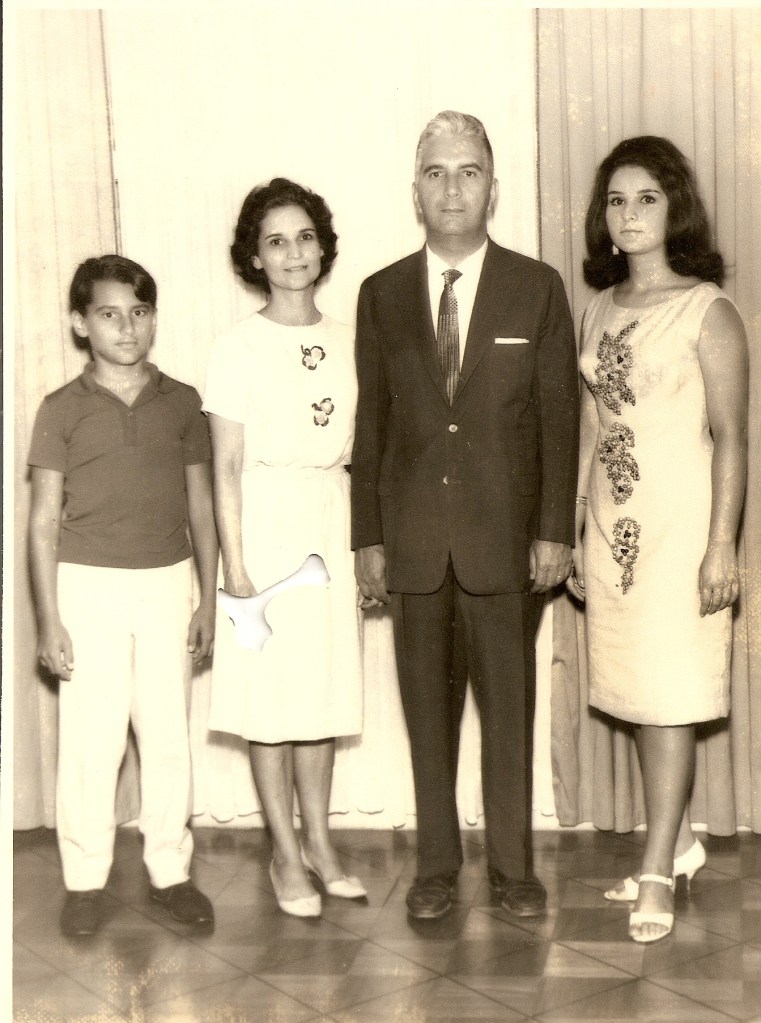
Abelardo Albuquerque with his wife Yedda and their children, Ivana and Severino, on the occasion of the 50th anniversary of my grandparents marriage.
The first foreigner I believe I ever saw was Madame Girard. She was sitting by herself on her porch, her hair totally white, as is mine today.
It was the kind of wicker (vime) furniture popular among colonialists in post WW2. I believe M. Girard was dead by then, but Mme had four sons with her. The oldest ones were Marcel, who worked for Sud Express/Night Express (later Air France) as did Antoine de Saint-Exupéry. Marcel married one of my father’s cousins, Zenóbia; they were based first in Natal and Rio and later, Florianópolis. The other son, Alfred, married Heloísa (Helú) and lived across the street from us on Osvaldo Sarmento, formerly rua São Gonçalo. Doctor Sarmento specialized in Public Health (cf. Félix Lima Júnior, Memórias de minha rua). Alfred and Helú were the parents of Lucienne Marie and Georges. They settled in São Miguel dos Campos, where they befriended the daughters of dr. Pedro Rocha, owner of Engenho Varrela, which eventually had to be sold. One of the Rocha daughters married my uncle Cláudio Duarte Medeiros and had my father as their devoted doctor and close friend their entire lives.
Maceió grew with the building of a new Cathedral, inaugurated by Emperor Peter the Second and Empress Tereza Cristina (as told in Abelardo Duarte’s book of the same title) and the consequent transformation of the Capela de São Gonçalo into the Igreja de São Gonçalo do Amarante in the same location on Alto do Jacutinga next to the original lighthouse before it was moved to Ponta da Terra, as older generations called the beaches north of Pajuçara and long before that part was named Ponta Verde and Jatiúca in the interest of greedy constructors and incorporadores.
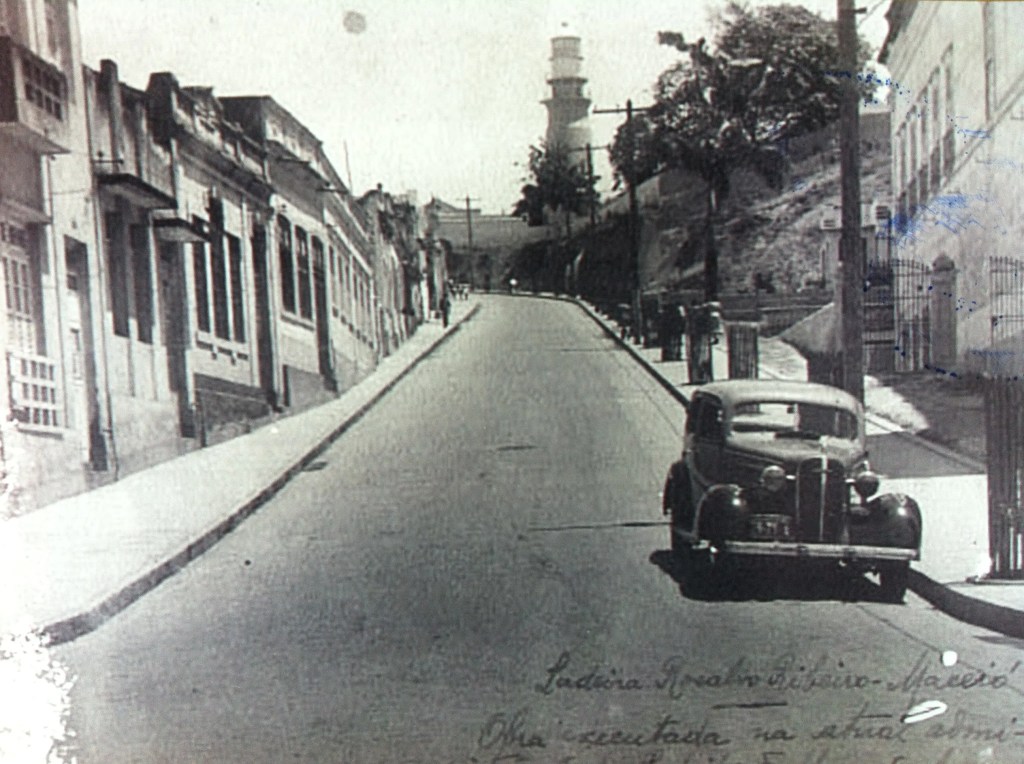
Photo: Unknown / Public Domain
Growth intensified further with the rails that were planted in that area now known as Farol, first with animal traction and later, electricity, in the perimeter that came to be known as rua dr. Osvaldo Sarmento (cf. História de Alagoas, accessed 9/15/2025), which also encompassed rua Ângelo Neto, rua Comendador Palmeira, Praça Rosalvo Ribeiro (the celebrated painter from Alagoas) and Av. Aristeu de Andrade, current location of Organizações Arnon de Mello, specially TV Gazeta.
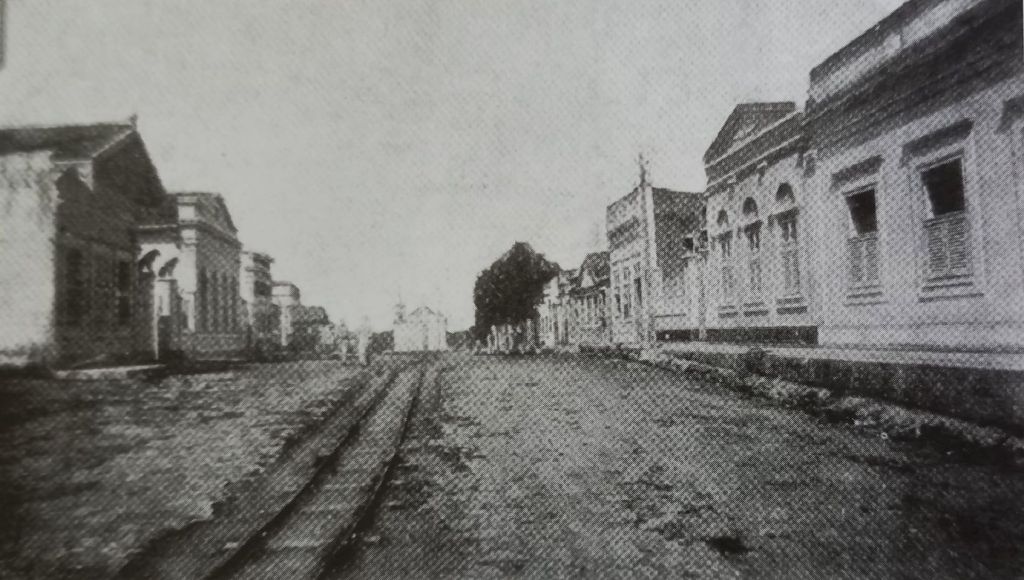
Photo: Unknown / Public Domain
Ângelo Neto also housed a small number of Jewish community members, including Mrs. Claire Calheiros, her husband Luís (Lula), her sister Renée and three daughters, including the eminent Antropologist profesor Vera Lúcia (who taught at UFAL and UFRJ), Viviane (who was a physician) and sweet Valéria (who played with the Paiva Torres sisters). Their mansion was eventually sold to TV Pajuçara.
The block housed important families in different fields such as the Marroquim clan with members in areas like Linguistics, and in different generations, construction (Mário Marroquim). In that space also lived important historians (cf. the above mentioned Félix Lima Júnior), jurists (Alfredo Gaspar de Mendonça) and writers (Rosinha Coelho Pereira do Carmo). If we expand the locality to include rua do Sol we can name others like the poet Cléa Marsiglia. And if we stop at number 484 we have our grandparents’ house, where my sister and I were born, with our father as the obstetrician. My grandparents’ golden anniversary took place at that house. It had to be the biggest party I ever attended.
When our parents married, their first house was at 35 Comendador Palmeira, next to the Alfredo Gaspar grandparents’ residence. That house is today the site of a well-known plastic surgery clinic. Their neighbors also included, on the Osvaldo Sarmento side, the Rui Palmeira family, both Vladimir (the UNE president) and Guilherme.
The area behind the church became known and still is until today as the Zêga, a corruption of a German-speaking resident’s last name, Seeger. As a child I was afraid of going there because of the chanting by Vavú, a son Rosalvo Ribeiro had in France, a bit like Nonê, a son Oswald de Andrade had in that country. And there was also the talk about the Efimoff couple’s naturist practice.
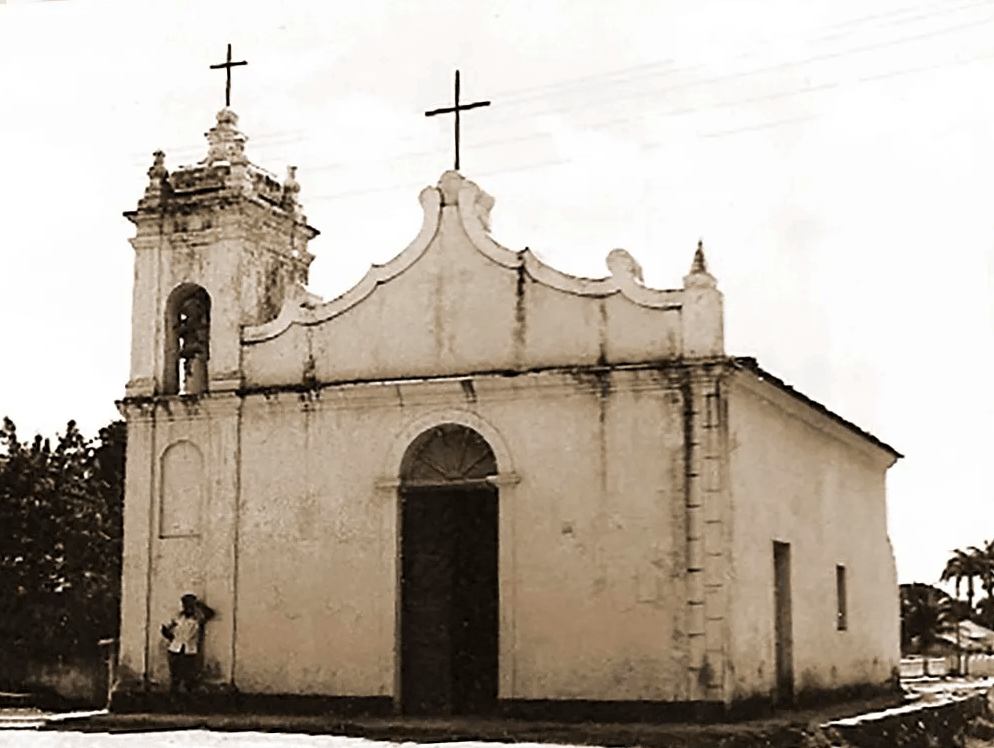
Photo: Unknown / Public Domain
The brothers Júlio and Jacinto were born in Branquinha, state of Alagoas. The latter, my great grandfather, was raised by a couple of Portuguese ancestry, Jacintho and Tereza (Têca) who lived in a town house (sobrado) at the corner of Praça dos Martírios and rua Conselheiro Lourenço de Albuquerque (rua da Boa Vista). The sobrado was rented to the state government, which used it as Secretaria de Segurança Pública for many years. The former was raised by their biological parents. The two branches of the family had strong ties and visited frequently, even as they married into the Frazão family. I was in frequent contact with Marlene when she lived in the New York / New Jersey area.
There’s also Margarida Maia and specially after marrying the French writer Chantal Jeanne Lafaye, Antônio (Toinho) Frazão, who have children and grandchildren in the US and Europe. I remember first reading Chantal in the Suplemento Literário do Jornal de Alagoas, whose editor at the time I believe was Enio Lins. It was February, deep into Wisconsin’s inclement Winter when it dawned on me that Alagoas’ best cronista at that time and a writer whose works I read with much delight, would later on become a member of the Academia Alagoana de Letras – and remarkably, she was not even a native speaker of Portuguese.
It’s interesting to note some parallels with the Girards here, not the least notable one being the spreading out of newer generations into other parts of the world, including the United States and German-speaking Europe. I myself have one great grandniece married in the Seattle area and a greatnephew in the German-speaking part of Switzerland who has two children of his own, my great grandnephew and great grandniece.
The first of the two Noêmias, Noêmia Duarte, sister of Abelardo and Alice Duarte, was a gifted painter, author of the altar-mor of the Nossa Senhora do Rosário dos Pretos church in Maceió. She demanded to receive the same dote (dowry) as that given to her sister Alice, my grandmother, and moved to Santos in São Paulo state, where she got married but whose descendants did not keep in touch with the Alagoas relatives.
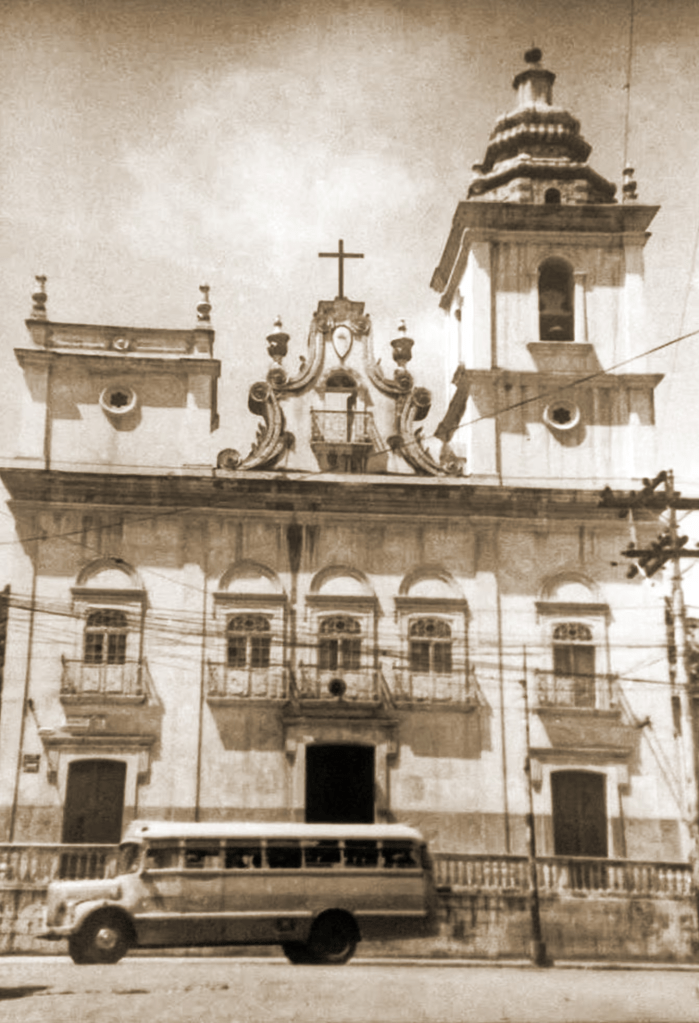
Photo: Collection of the Metropolitan Curia of Maceió/ Public Domain
My paternal grandmother, Noêmia Brandão da Silveira Albuquerque, was part of the fourth (of fifteen) branch of the Viçosa, Alagoas, group, daughter of Caetano Donato (Caetaninho) and Laurinda Ferreira (Dondon). Her relatives included important figures in Brazilian history and culture like Demócrito and Epaminondas, as well as actors Paulo Gracindo and Gracindo Júnior.
Mme Girard’s varanda is now occupied by patriarchs of Syrian-Lebanese or Palestine extraction, representatives of the change in Alagoas’s economy, from sugarcane-derived and aristocracy-controlled commerce (for example, the Palato grocery and restaurant chain). When my grandfather Jacinto Medeiros Filho died in 1965, my grandmother Alice Duarte Medeiros was moved from the mansion on 484 rua do Sol to 35 Comendador Palmeira, she became the only lady the Cabús patriarchs allowed to be friends with dona Martha.
A new generation of the Cabús family lived next door to us on Osvaldo Sarmento. Examples were Azis and Nelma and their son Cláudio (cf. Casas Cláudio in Recife and Maceió). Members of that generation were university professors, one of them, Arlindo, in charge of the UFAL entrance examinations (then called vestibular, and later, ENEM), and distinguished architects and poets such as Ricardo Cabús, who came up with the Varal de Poesia series.
There were other foreigners too, and they were in Brazil quite simply against their will. Their parents had been captured by Portuguese slave traders and made to serve some of our forebears. The ones I met were born barely after Abolition. I remember mostly Camila (Didi) who worked for my great grandparents Medeiros and Isabel (Bé) who did the same for our friends and neighbors, the Mendonças. There was also dona Maria do Brás, a mestiza Indigenous Portuguese old woman living by herself and her dog Bobby. No one ever saw Brás and she survived with food sent by her neighbors, something like the quentinhas of today’s Brazil. Among my saddest childhood memories is dona Maria’s wailing the evening Bobby died.
The first children I played with lived in the Osvaldo Sarmento, Ângelo Neto[SA1] , Comendador Palmeira and Zêga area (the Barbosa, Mendonça, Valente, Magalhães and Paiva Torres children) or were relatives of mine (Celso Quintela Brandão) or visitors of neighbors (Alex Teixeira Barbosa), who went on to be my lifetime strongest friendships. There was also the wonderful year or two when following a serious accident involving Estácio, my uncle and Armed-Forces physician from what was then known as Guaporé (current state of Rondônia), my uncle Paulo and aunt Terezinha Albuquerque brought the children from my Syrian-Lebanese aunt Adelpha to Maceió where we took swimming classes in the above mentioned Clube Fênix, totally unaware of what was happening in the nation.
My grandmother Alice Duarte had a cousin called Nina, who married Comendador Viana, a very successful businessman in Maceió. Among other businesses, for a while he owned the Dispensa Familiar. Nina’s daughter, Helena, married Adriano, a member of the large Magalhães immigrant community in Maceió. Like most immigrant communities, the one in Alagoas sponsored new members. The richest among them brought relatives from the Viana do Castelo area, in Portugal. As an example, Comendador Antônio Magalhães brought less wealthy relatives such as Adriano and Luís, as well as a sister called Adelaide, who had a green thumb as she took care of her large yard off Tomás Espíndola, Igreja de Santa Rita and Praça do Centenário, not too far from the mansion occupied by the Comendador and his wife, Dona Maria Magalhães.
Luis Magalhães, his wife Elza and their only son, Ronaldo, were never comfortable in Maceió and so returned to Elza’s native area of Bauru in the state of São Paulo, where her family, the Telles Nunes, originated from. Ronaldo has had a successful career as an civil engineer in the city of São Paulo, including the Jardins area.
After graduating from high school, Terezinha Magalhães’ children and grandchildren also left – to Brasília and other places. As of this writing, their houses, and in fact almost the entire block, lies in ruins. That includes schools, clinics and residences.
Our family were very attached to this group of people; my father was their doctor and a number of them were part of our family.
Helena and my grandmother Alice often visited their cousin Laura, who they lovingly call Dinha Laura. Laura, spouse of Seu Benjamin Medeiros, owner of Feira Franca, an early version of a grocery store downtown Maceió. Supermarkets were late coming to Alagoas. The first one was CEIA, in Jaraguá. It belonged to the Dubeux Leão family. I enjoyed shopping there as a child because they sold something I loved and still love, back then called torrone.
[SA1](1872 – 1906) (cf. História de Alagoas, accessed 9/15/2025)
Then at some point between the JFK murder in Dallas, Texas, Thanksgiving Day 1963 and the disgraceful civil-military coup on March 31st/April 1st 1964 in Brazil, one of several US interventions in Latin America and the Caribbean, we got new next-door neighbors. 1964 was also the year we got our first dog, Poppy, who was far from being a friendly dog.
They were the Collins, from Spirit River, a small town in the conservative, oil-rich Canadian province of Alberta, which borders the US states of Montana and Idaho. Back then, Petrobrás did not have the expertise to do offshore prospecting, so technicians were transferred to other nations or regions. The prospectors wasted no time exploring the beauty of Northern Alagoas (cf. my second book of poetry, Ao norte daqui, 2023). Places like Maragogi, Milagres, Japaratinga, even photographing a palm tree called Gogó da Ema…
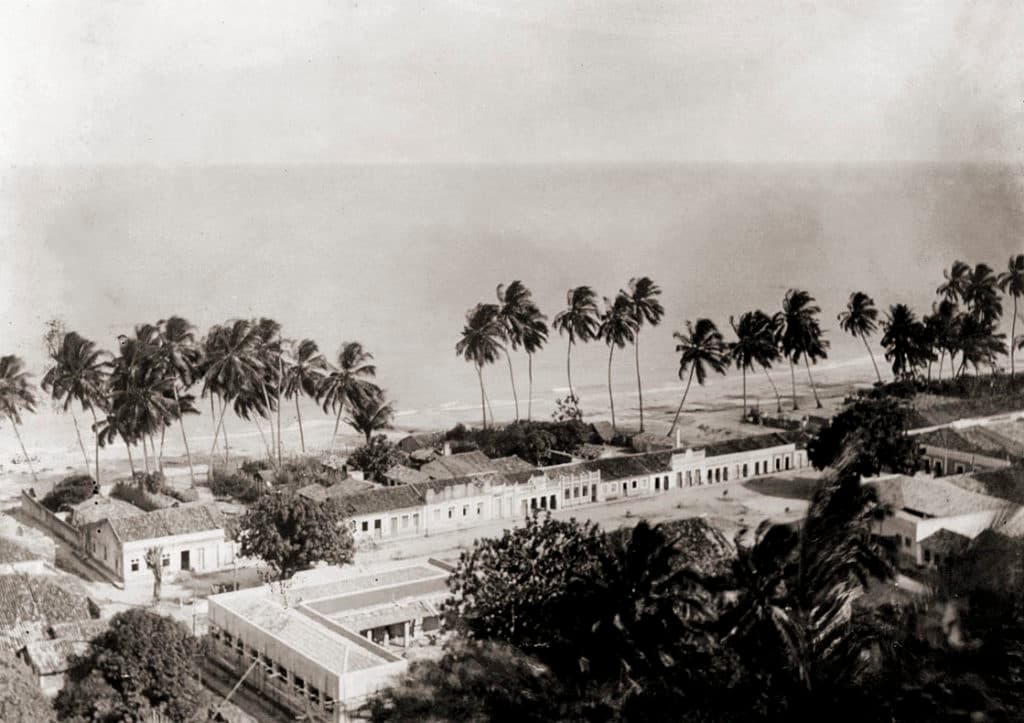
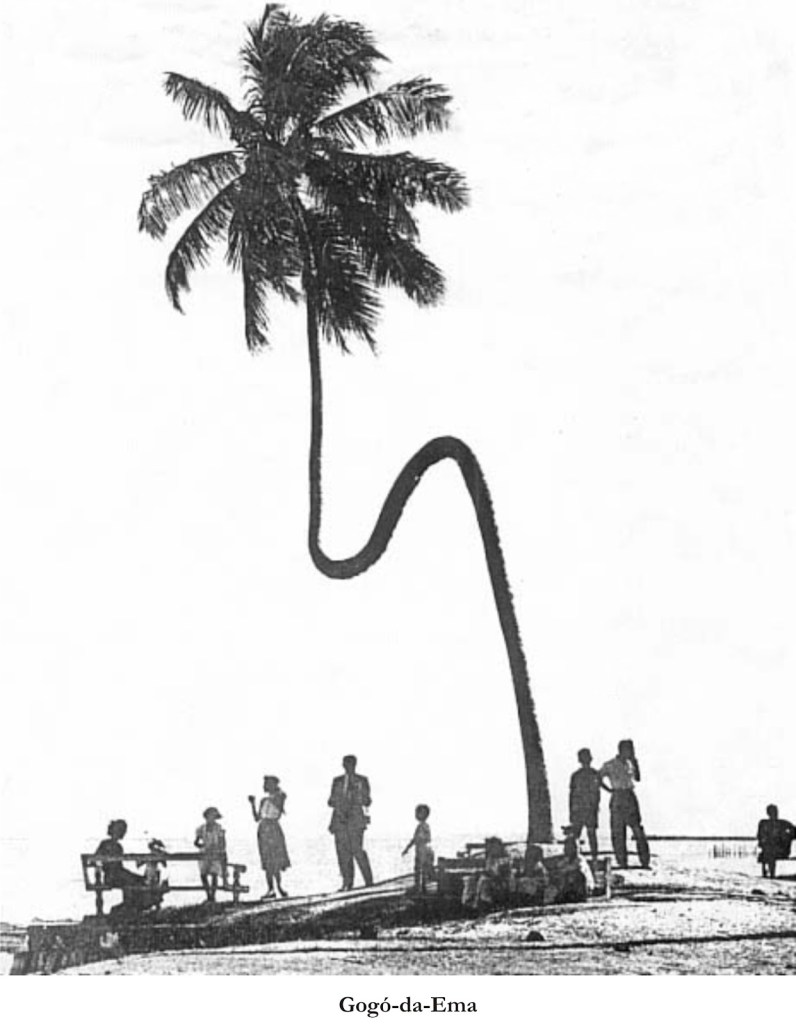 The iconic, eternal Gogó da Ema
Just like Madame Girard, who according to her son Alfred, on account of being born in Philadelphia, was not French, the Collins, though English-speaking, were not American or British. They were Canadian and proud of it. The new neighbors lived in the same house occupied previously by members of the Cabús and (briefly) Aurélio Lages families. Across the street from Osvaldo Sarmento 75 stood house number 82, of historic interest for being the first site of the Mormon Church (LDS) in Alagoas.
Osvaldo Sarmento went on to be the residence of Representatives (Deputados estaduais e federais), and even one Presidente da República (Collor). One of its buildings has served as Cultura Inglesa, Polícia Federal, and Governor’s Mansion. Maceió’s first natural food restaurant (Nativa) was located there and it was also the sales location for Parque das Flores, the first park cemetery in Alagoas. The Conselhos Regionais of Medicine (CRM) and Engineering and Architecture (CREA) functioned there). The first highrise built in Farol, an initiative of industrialist Tércio Wanderley in a project by Recife architects Janete Costa and Acácio Gil Borsoi, was also built on Osvaldo Sarmento, much to the chagrin of neighbors like my family and the Collins who were bothered by those infamous bate-estacas.
With the co-ed system still a long time away, some of the Farol mansions served as schools (Colégio Batista Alagoano under the direction of Pastor Boyd O’Neal, to Guido (see below), and Santíssimo Sacramento (where my sister did her entire studying, from primário to ginásio to colégio levels, and where her daughter, and my niece Glênia, lives in a residential tower today). In addition, there were airline offices (the late Varig), clinics and hospitals (Manso; Santa Casa; Unimed). Zêga houses went from humble (such as private teacher Benita’s) to mansions like those of sugar usineiros (cf. theMoreiras from Capela), the Minervino Gomes drugstore chain, and a cardiovascular disease emergency clinic where my father died of complications from pneumonia, May 24 1994.
Following all those socio-political changes my parents enrolled me in new schools. I had gone to Tia Lourdinha for kindergarten and first grade, and then to Colégio Guy de Fontgalland (owned by the family of Father Teófanes Augusto de Barros and known as “Guido”), where I had a strong bond with the teachers, all but one young white women, except, again, professora Benita. I still remember their names, Teomirtes Barros Malta, Teresinha Viana Magalhães, dona Maria Botelho, and dona Marlene who lived in Zêga across the street from Elsinha Brennand Pinheiro de Almeida, who had strong ties to my family and organized a Christmas gift collection at the end of the year.
I didn’t have my first male teacher until the sixth grade. He was openly gay and known as Juju. An obvious victim of homophobia, he dressed elegantly, always wearing a tie, sometimes even a bowtie. All of that in the early 1960s.
Next it was the Marista or Diocesano school for boys where the entire faculty was male; that situation changed the year after I left for Recife when it became coed. Marista High was connected to the Diocese de Maceió and had a more international climate. The Marist Brothers were mostly of Italian, Spanish, and Portuguese extraction. I remember a student from Japan whose family were recent immigrants and whose life was made more difficult during recess. The school had strong ties to deeply Catholic families.
During my high school years it often became the case to have private tutors. Among the best known were Zezé Loureiro, Edmilson Pontes and Estela Dominguez. Some of the best created schools such as Sagrada Família. In Recife some of these private schools became cursinhos, which created convênios such as Pernambucano and União, which I attended at Colégio Nóbrega during School Year 1969.
Back in Maceió, at Marista High, I played – no, no, not soccer – volleyball. It was the Infanto-Juvenil (sub 18) annual tournaments and we were sponsored by local clubs such as Fênix Alagoana and Regatas Brasil (CRB) [see below], although I was, and still am, azulino. Tight friendships were made those days, with Emil de Lima Medeiros, Marquito Mota, Lula Pacheco, the Japson Almeida boys, Carlos Eugênio Rocha (Xinda!) and others.
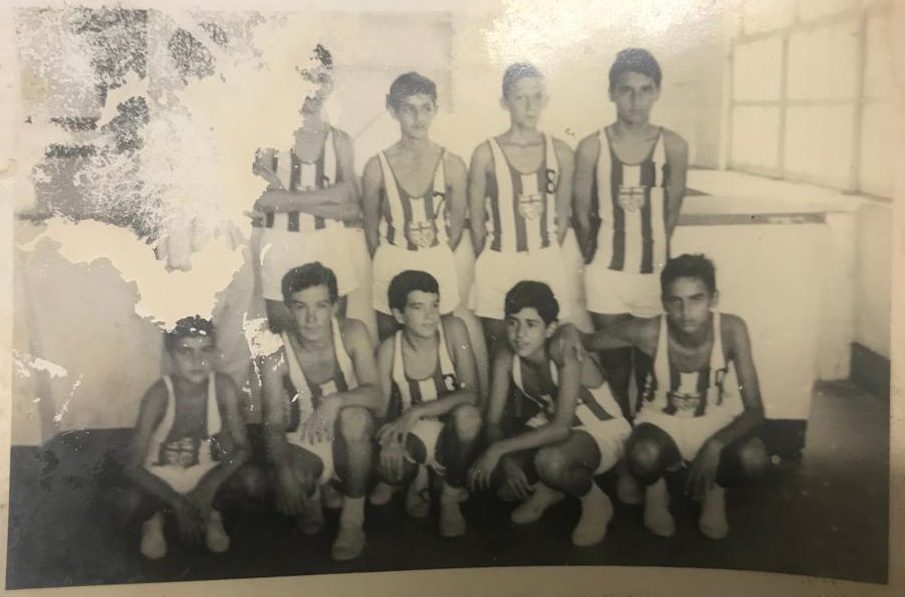
It was also at that time that death made its first strides among our young group. I was hit hardest by the passing of Roberto Moreira Gomes and José Cláudio Lessa Peixoto before they turned eighteen.
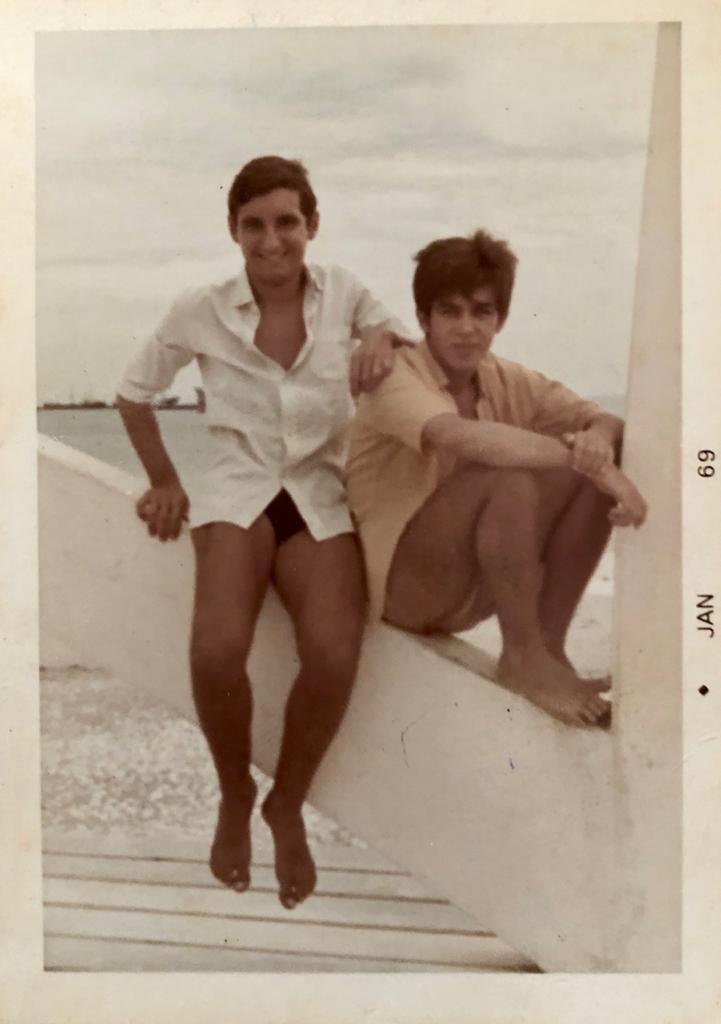
When time came for the Collins to be transferred, they moved, first to Bahia and later to Durban in the English-speaking area of South Africa, where for a time Fernando Pessoa’s father was a businessman. It was a time when Pessoa wrote magnificent poetry (cf. his English Poems, self-published 1921).
The Collins also taught us a negative lesson as they failed to arrange for their vulnerable dachshund, Serena. Being in Bahia, they could have easily returned to collect Serena in Maceió, leaving it instead up to their neighbors to arrange for a new home for the little dog, who I am convinced, knew she was being left behind. It was then that I learned that look of someone who knows they are being abandoned. Fortunately the situation also shone a light on the work of those like my sister and her children who pay for veterinary care and sometimes, adoption. That includes the most glaring cases of human mistreatment of animals, most specially Pirata, who survived a fall from a construction site.
By the time the Collins left Maceió I was speaking English fluently at age 12. They had taught me to speak the language using the best method there is – the immersion approach. Now it was up for someone else to pick up the job from them.
That person was dona Creusa de Souza Acioly. Creusa specialized in foreign-language teaching to children and teenagers. From her house at rua da Caridade in Pajuçara next to the Atlantic fuel tanks the locals called Atlantique and, curiously, the same street where Graciliano Ramos once lived and wrote much of Angústia at), not too far from where my maternal grandparents had a beach house. The house, Creusa’s and Cyro’s house, where my father would drive me to and from, convinced as he was of English’s importance in my future.
I believe that Creusa, with her pedagogical gifts, was an early user of songs in the foreign-language classroom. Together her students memorized and sang (along with Julie Andrews) the entire The Sound of Music album as well as the Beatles’s Help (the Collins’s goodbye present) and some of her favorite Frank Sinatra hits (“I love Paris” among others).
To this day I regret not dedicating my first book of criticism to Creusa (Violent Acts, 1991) but I did dedicate my second book of poetry (Ao norte daqui, 2023) to Solange Berard Lages (later, Chalita) who was my strongest supporter in the early 1970s, a time when she was directing the Departamento de Assuntos Culturais (DAC) da Secretaria de Educação de Alagoas, with Penedo-born Carmen Lúcia Dantas as her assistant. Carmen and Celso went on to create the Ilha do Ferro community on the lower São Francisco river. With Solange’s support I was awarded the Prêmio Jorge de Lima by DAC in 1974 and 1975; I also received the 1975 Short Story Award from the Academia Alagoana de Letras. Later on, as director of the Suplemento Literário of Jornal de Alagoas, she kept publishing the contributions I sent her from the United States. Before the decade was out I won best fiction prizes from cutting-edge literary journals based in Rio and São Paulo like Escrita and Ficção (cf. Creative Work).
Creusa and her concunhada Maria Rocha Cavalcanti Accioly (as in her books, Delícias da cozinha alagoana (Express Printing Services, 1997) and Fatos, personagens, História de São Miguel dos Campos (Brasília, 1992) embody my understanding of what an academia should be. Following the French example there would be an Academia Brasileira (not an Academia Brasileira de Letras) which would then encompass representatives from different parts of society like musicians, film directors, members of the Armed Forces, etc. Such an Academia would be run by its members and not by a group of local wealthy people as has been the case in Alagoas for decades now.
At that time there were family feuds that culminated with some members changing or dropping last names altogether. Names such as Silveira or Magalhães da Silveira stopped being used. My paternal grandfather, for example, only used his last name for his children.
The transistors (radinhos de pilha) were initially imported from one country (post-WW2 Japan) and later, Zona Franca de Manaus. There were other items like sandálias japonesas (or, the name of the brand, Havaianas. To that effect, the words were in English but the names were in French (Maison Dior, Brigitte Bardot of Búzios fame, charme, nouvelle vague, imports like Chanel #5) and the goal was protest such as jeans, t-shirts with the peace symbol, to shock the bourgeoisie. Sartre, de Beauvoir, Camus and their philosophy of Existentialism became central to the intellectual community. If your parents had money, they wanted to send you to Havard or Yale but for the philosophy crowd the place was la Sorbonne.
Maceió’s first mall (“shopping”) was late coming (Iguatemi, 1989) and when it did, most of the traditional shops (Rua do Comércio) had closed e.g. Drogaria Globo, A brasileira, Casa Normande, Lojas 4.400.
In Maceió and elsewhere, teenagers would receive the information via this new media including mostly radinhos de pilha. My first one was bought from a home boutique in the Av. Pará neighborhood. It was the vehicle that brought me and my family the news of the Kennedy assassination, the Marylin Monroe overdose, and the March 31th 1964 civilian-military coup. Pro and con groups discussed the meaning of dictatorships, be they civilian like the Vargas one (1930-1945) or military (1964-1985) since all dictatorships are idiotic because they are based on censorship and corruption.
In a dictatorship, if you were educated and had the chance, you would go to a place like London where Brazilian music idols were in exile, people like Caetano Veloso and Gilberto Gil, or Italy (Chico Buarque). If you were in the Social Sciences, the obvious place would be Paris. Depending on your level of fluency, film students went to Southern California e.g. the Film programs at USC, the music studios, and Santa Monica and the beaches for the surfing crowd. The party moved on to Northern California and the San Francisco area, especially a certain corner named Haight-Ashbury and the poet Allen Ginsberg, author of Howl, as well as owner of City Lights bookstore and poet Lawrence Ferlinghetti. NYC came back with a certain nightclub, Studio 54, frequented by the likes of Michael Jackson, Liza Minelli, Andy Warhol and a billionaire by the name Donald J. Trump.
With the end of the Vietnam war and consequently of the protest movement (cf. the Woodstock Festival), the country was turning to the right. The former California governor Ronald Reagan was elected to a 2-term mandate as president, followed by Texans Bush father and son (the latter for 2 terms), and shortly after, by that previously mentioned billionaire, who was involved in the scandalous relationships the island owner, Jeff Epstein, had with underage girls.
As of this writing, Trump has been a ferociously anti-immigrant president, opposed to the UN, NATO, and EU. He has also sent US troops into other countries, such as Venezuela. Trump also imposed high tariffs on many countries and ordered his immigration police, ICE, to invade US cities, in at least two cases with fatal results.
I remember other nationals living at Osvaldo Sarmento as well, like a German-speaking Swiss family who had a daughter my age called – what else – Heidi. There were other strong friendships later as I moved to Recife for Medical School and ended up at Letras as well (cf. Valéria Campos da Silveira from the Teachers Training Program, Afonso Rosa, Meta Loei and Lula Wanderlei, the gifted artist who for decades worked with distinguished Alagoas psychiatrist Nise da Silveira at her Institute in Rio, Colônia Juliano Moreira (CJM), in Jacarepaguá. Lula did the illustrations for my first book of poetry (Exercício: Exercícios [1975]), which my father paid for with love.
As I was preparing to move to Recife my socializing was mostly with the group named O Senado, formed by teenagers like Alex Barbosa, his sister Tereza Cristina, the Kerbi boys, the Gonzaga boys, Geo Bentes, Marcos Breda, and a few others.
In my last years in Recife, Celso moved out to Olinda and on to a brilliant career as a director of social documentaries. I stayed on in Recife but not for very long. What made the big leap possible was the support of some fantastically gifted teachers and professors such as Fernando Castim, Leônidas Câmara, Father Francis Murphy, SJ, and in Medicine, Dr. Ruy João Marques. After acing the GRE and the TOEFL I was offered an IIE / Fulbright grant by the Casa de Thomas Jefferson at the US Embassy in Brasília, which allowed me to do an M.A. in English, and, combined with a Teaching Assistantship, a Ph.D. in Comparative Literature at the University of North Carolina in Chapel Hill, where I made strong friendships with colleagues who had important careers and made great contributions to the profession, people like Jura Oliveira, Jim Weigand, Doris Mahaffey, Amanda Andresen, Michelle Noel and Mariangela Mancuso, the latter two no longer with us.
My career as a faculty member began in 1982-1983 at Cornell University. It was a brief period but long enough for wonderful friendships to be made at Modern Languages and Linguistics, Hilary Sachs and Jim North, and the best students a teacher could ask for.
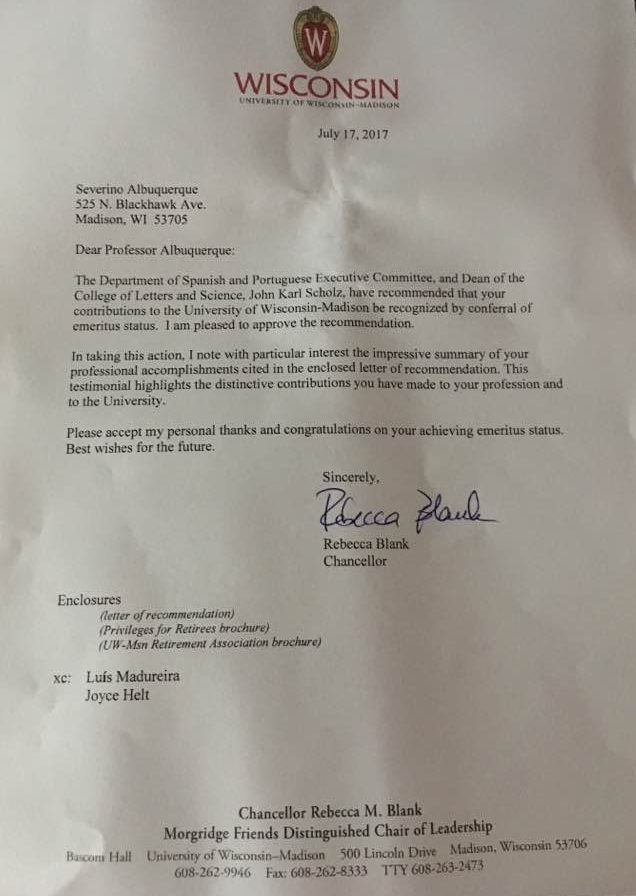
From Cornell’s position as Lecturer I moved on to the University of Wisconsin (UW) in Madison’s tenure-track position, where I was from 1983-2017, moving from Assistant to Associate to Full professor. I am very proud of, and grateful to Wisconsin for the Chancellor’s Distinguished Teaching Professorship and Emeritus retirement.
I am proud to have had the chance to direct or co-direct a number of Ph.D. dissertations, including:
1998.
Eliana Goulart Berg (deceased) (Ph.D. Portuguese)
The discourse of cruelty and the absurd and the representation of difference in the theatre of women playwrights in Latin America
2000.
Steven Fred Butterman (Ph.D. Prtuguese)
Brazilian literature of transgression and postmodern anti-aesthetics in Glauco Mattoso;
2001.
Michael J. Ferreira (Ph.D. Spanish)
A lexicon of selected works printed by Valentim Fernandes, 1496-1502;
2003.
Paul M. Sneed (Ph.D. Portuguese)
Machine Gun Voices: Bandits, Favelas and Utopia in Brazilian Funk;
2004.
Cláudio Medeiros (PhD Dramatic Arts, U California-Berkeley, co-directed by me);
“Queen of the night”: the representation of male homosexuality in Brazilian theatre (1960-1980)
2006.
Vanessa Clare Fitzgibbon (Ph.D. Portuguese)
Em torno dos “re-sentimentos” raciais brasileiros : rac̜a e identidade em Viva o Povo Brasileiro, de João Ubaldo Ribeiro e Cidade de deus, de Paulo Lins;
Rebecca J. Atencio (Ph.D. Portuguese) Perversions on Parade: Brazilian Literatu
Memory’s Turn: Reckoning with Dictatorship in Brazil;
2008.
Steve K. Smith (Ph.D. Portuguese)
Palcos Políticos: Activist Theater in São Paulo, Brazil, at the turn of the Millennium;
2009.
Talía Guzmán González (Ph.D. Portuguese)
Men at the edge: marginal(ized) masculinities and male friendships in late XIX and early XX-century Brazilian novels
2017.
Francesca Ferrono (Ph.D. Portuguese)
Performance as Protest: Collective Authorship, Cultural Agency, and the Political in Espanca!’s Theater;
It was also my chance to live in such a cool place and meet fantastic students at every level (oh how I loved teaching and directing the Summer Intensive Portuguese Institute [SIPI]) (cf. Academic Work, Articles about Administration) and directing the several dissertations I did.
It was in Madison that I met my first long-term partners Duane Spry and Ed too, plus lifetime friends Fred and Joost, Luca Bacchini, Mary Schil, Barbara Forrest and Suzanne Desan and the several Ph.D. dissertations I had the privilege to direct.
The most relevant part of my research and teaching at the UW was related to international activity, e.g. as director of Latin American and Caribbean Studies; co-editor of the Luso-Brazilian Review; and specially as director of the Brazil Initiative (see Academic Work, Articles about Administration). This would not have happened without the support of key figures such as ambassador João Almino at the Consulate of Brazil in Chicago; the Nabuco family in Brazil; and International Studies Dean Guido Podestá at the UW. Among the Nabuco Award recipients were Matthew F. Rarey and Nick Barnes. Among participants in the Writters in Residence program were Bernardo Carvalho, João Gilberto Noll, Cristóvão Tezza and Adriana Lisboa.
My combined training in medical and literary and cultural studies was the best legacy my father gave me, as witness my work as volunteer interpreter at the hospital ship, Hope, in the early 1970s, to the point that US doctors demanded my services during appointments and procedures. It has also served me well at orientation camps in North Carolina and other states.
These pages are being written in the spirit of reconciliation, keeping in mind the Parable of the Talents (cf. Matthew 25:14-30) to offset compulsory heteronormativity (cf. Adrienne Rich) demands and the feelings held by many that love is conditional, e.g. that a child get a degree in a certain field and give the parents a definite number of grandchildren. In the circles and names found in the narrative above there was a good deal of homophobia among relatives and family friends. In spite of all the caring, this needs to be said. In the end, it is what I remember, or wish to remember.
Beginning circa 1981, the United States, Brazil, and the world went through the AIDS epidemic, which I escaped because of a stable relationship and the fact that we lived in small college towns such as Chapel Hill and Ithaca. I close these memories with another regret, that of not dedicating a book (Tentative Transgressions, 2004) to a group of people, the victims of a health event that was also a terrible socio-political crisis.
As a patient of Stargardt’s disease, I am preparing to some day lose a large portion of my vision, like Homer, Camões, John Milton, Jorge Luis Borges, and Cego Aderaldo, joining their company but not their greatness.
I wrote most of these notes in Maceió, with the last paragraphs composed on Brazil’s Independence Day, September 7, 2025, four days before observing a quarter century from 9/11, and a day before celebrating the political emancipation of the Province of Alagoas.
In the end, I realize that despite being away for such a long time, I am back to spend the last period of my life here and that above all, the foreigner was I.


